A Plant That…Counts to Two? Meet the Amazing Venus Flytrap
It doesn’t have eyes.
It doesn’t have a brain.
It doesn’t even have nerves like we do.
And yet… the Venus flytrap knows when something is crawling on its leaves, and it waits for just the right moment to snap shut.
Let’s explore one of nature’s most fascinating plants and uncover how (and why!) it does this clever counting trick.
What Exactly Is a Venus Flytrap?
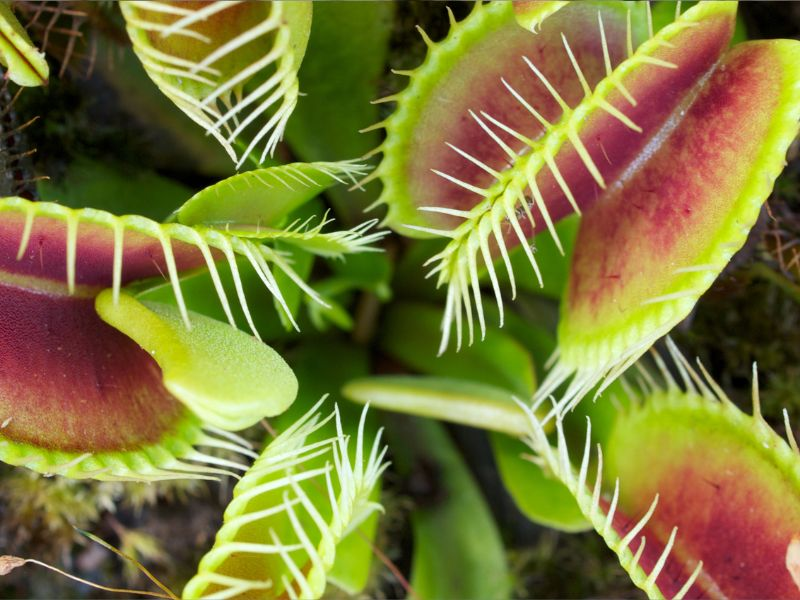
The Venus flytrap (Dionaea muscipula) is a small carnivorous plant native to the wetlands of North and South Carolina in the United States.
It grows close to the ground and has rosettes of green leaves, each ending in a hinged “trap” lined with tooth‑like edges.
Why carnivorous? Because these boggy soils don’t have many nutrients, especially nitrogen, which plants need to grow.
To solve this, the Venus flytrap evolved to catch insects — flies, ants, beetles — and absorb nutrients from them.
How Does It Know When to Snap Shut?
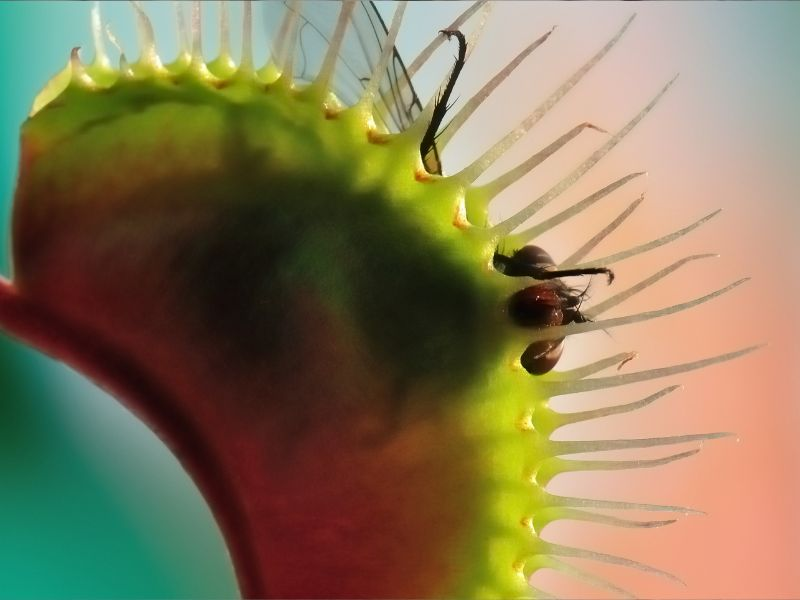
If you look inside a Venus flytrap’s “mouth,” you’ll see tiny trigger hairs, usually three on each lobe.
These hairs aren’t sticky or sharp. Instead, they act like a built‑in alarm system.
Here’s where it gets amazing:
✅ If just one hair is touched, nothing happens.
✅ Even if it’s a big, juicy bug — still nothing.
✅ But if two hairs are touched within about 20 seconds…
💥 SNAP!
The trap folds closed in about one‑tenth of a second, making it one of the fastest movements in the plant world.
Why Wait for Two Touches?
It’s all about being smart with energy.
Snapping shut costs the plant precious energy. If it closed every time a raindrop fell or a bit of dirt landed inside, it would waste resources and might not catch enough food.
So, the Venus flytrap evolved a clever double‑check system:
“I felt something… but let’s be sure it’s really food before I commit.”
Think of it as nature’s double tap to confirm.
What Happens After the Snap?
Even after it closes, the trap doesn’t seal tightly right away.
The plant is waiting for more signals.
- If the insect keeps struggling and touching those hairs again and again, the plant becomes certain:
“This is the real deal!”
It seals the trap and releases digestive enzymes, breaking the insect down over 5–12 days and absorbing the nutrients. - But if nothing moves inside?
No problem. The trap reopens in a day or two, ready for the next opportunity — no hard feelings, just a false alarm.
Is It Really Counting?
Not like we do, no numbers or math.
When something touches a trigger hair, the plant doesn’t have nerves like we do, but it does create a tiny electrical signal that travels through its cells.
Scientists call this signal an action potential.
It’s the same term used for the electrical impulses that travel along our own nerves and muscles, although in plants the process is slower and happens through specialized plant cells rather than neurons.
👉 In a Venus flytrap:
- The first touch generates an action potential but doesn’t close the trap.
- If a second touch occurs within about 20 seconds, the signals add up — like stacking energy — and that combined electrical activity triggers the rapid closing of the trap.
This bioelectric mechanism is a beautiful example of convergent evolution: even though plants and animals are very different, they’ve both developed ways to use electrical signals to react to their environment.
Talk About It at Dinner
Imagine if your own body only responded to a second signal.
What if you only blinked after someone said your name twice?
How would your day change?
Want to Learn More?
The Venus flytrap is a brilliant adaptation, a plant that supplements its diet by becoming a part‑time predator. It counts touches, saves energy, and has evolved one of the most fascinating survival strategies in nature.
✨ Hungry for more weird and wonderful facts?
Check out our other blog posts from the biggest migrations in the animal kingdoms to how trees talk to each other underground – bite‑sized brain snacks for curious kids (and parents!) who love asking, “Wait… how does that work?”
Curious minds are welcome here. Join our cozy corner of the internet 🧠✨
Related Posts